Editorial report by Anca Ghinea
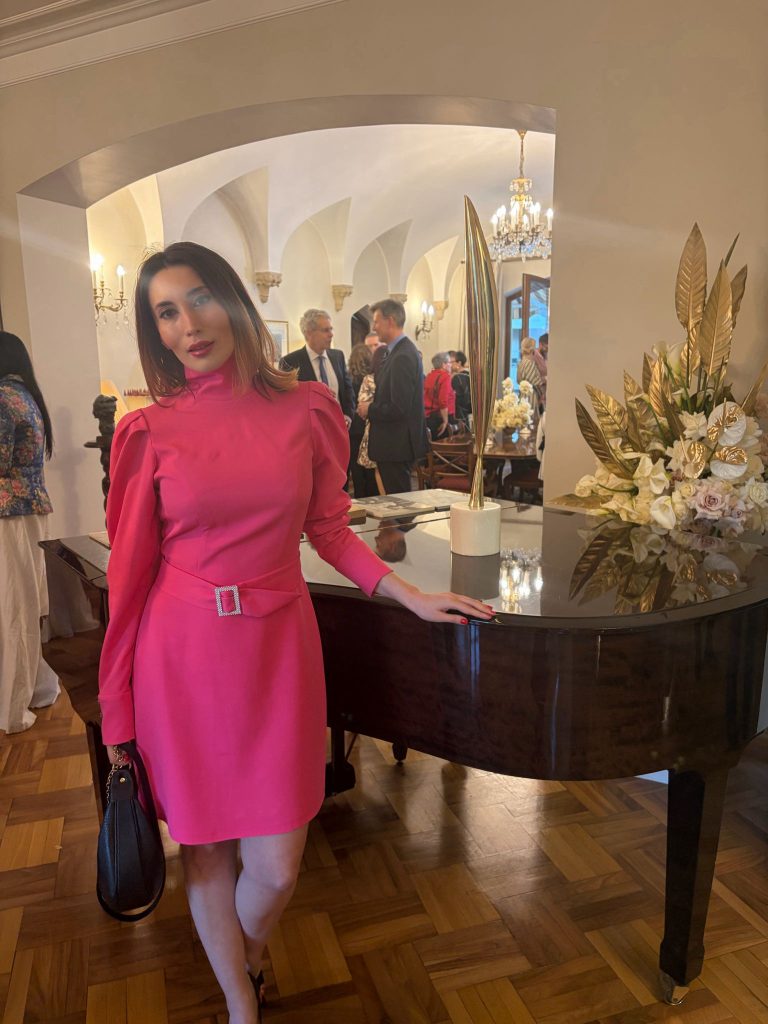
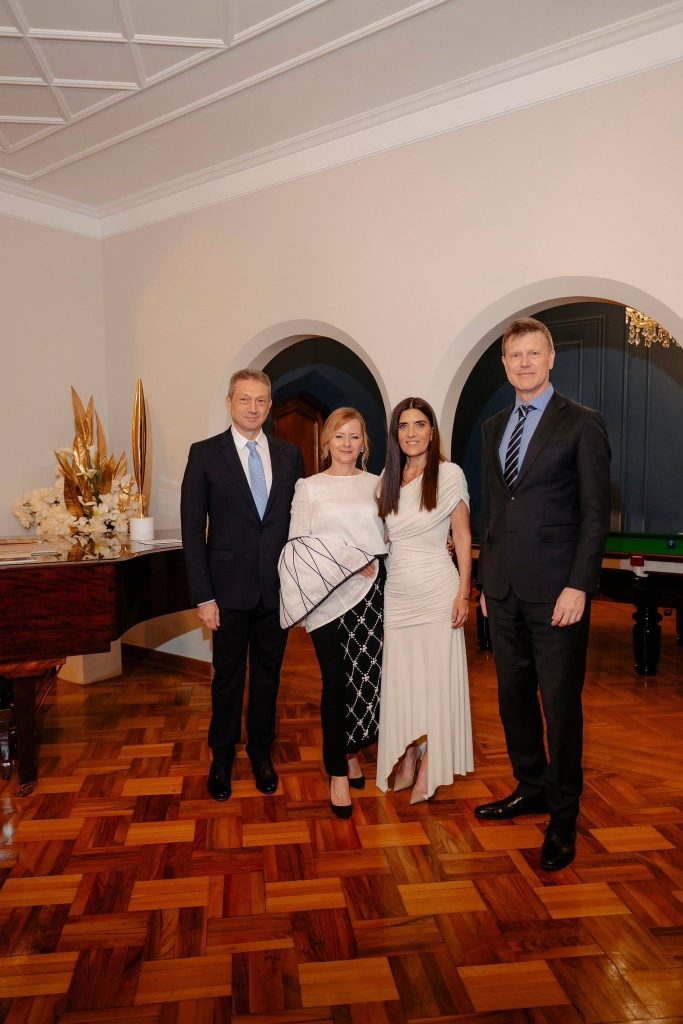
On the evening of May 6th, the residence of His Excellency, the British Ambassador to Romania, Giles Portman, and his wife, Lucie Portman, transformed into a space of emotional memory and cultural legacy shaped by Brâncuși’s remarkable work.

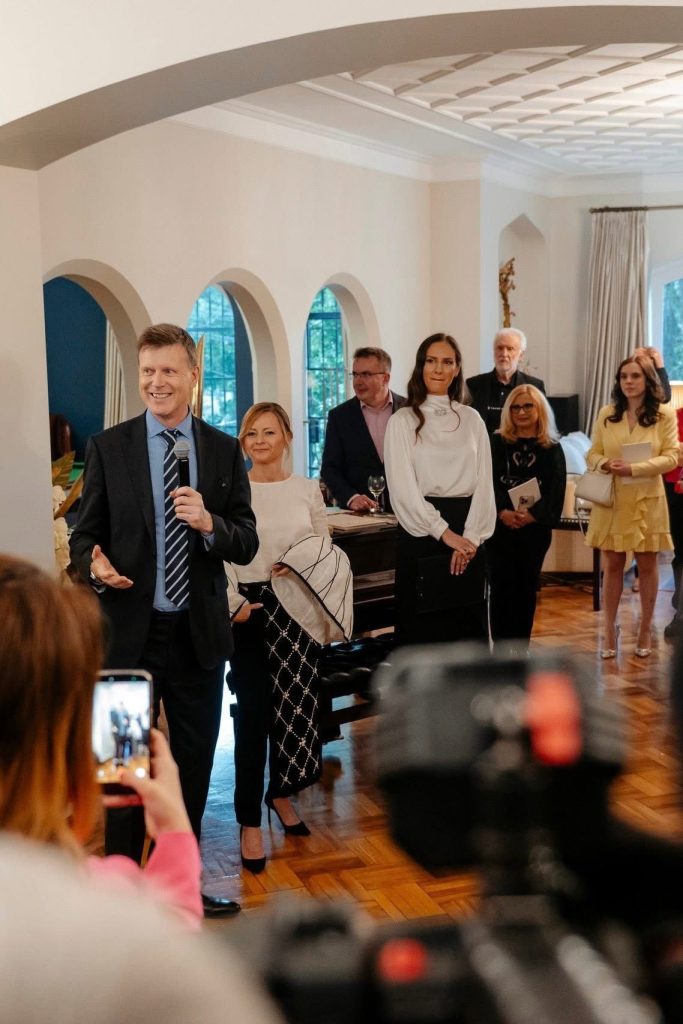
Following the invitation extended by Their Excellencies, I returned to document, in a comprehensive report, an event that proved not only symbolic, but profoundly meaningful.
Within the residence, in an exclusive and refined diplomatic setting, alongside members of the cultural, artistic, and media elite, discussions unfolded about the deep diplomatic roles that culture continues to carry across borders.
Under the patronage of the British Embassy through Their Excellencies Giles and Lucie Portman, the Foundation for Art, Nature and Society, and the Romanian Heritage Institute, the exhibition Loving Brâncuși offered guests a glimpse into the intimate universe of the sculptor who forever changed the language of modern art.

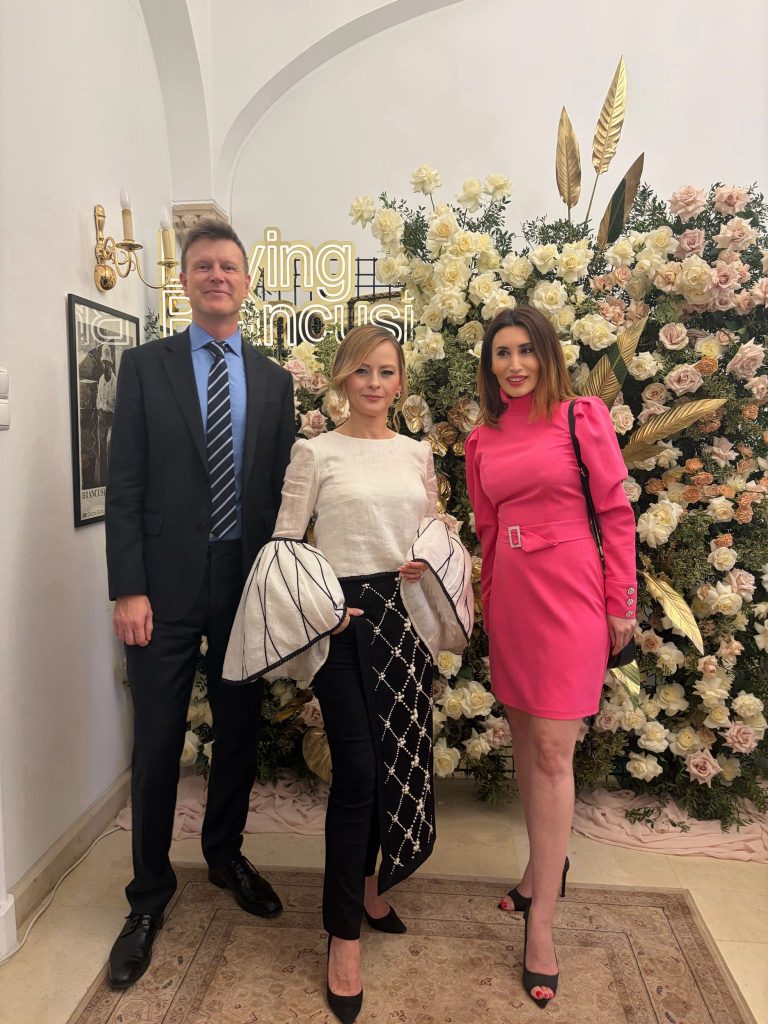
The atmosphere was one of rare delicacy: the music Brâncuși once listened to in his Paris studio, enriched with modern registers, filled the rooms, creating the impression that the great artist might enter the salon at any moment, with his quiet steps and his sharp yet warm gaze.
Cultural diplomacy – a bridge between worlds
His Excellency Giles Portman spoke with emotion about the joy of hosting the exhibition: “When we were given the opportunity to host an exhibition celebrating Brâncuși’s anniversary, we welcomed it with openness and delight.”
“Brâncuși is one of those rare artists who transform not only an artistic movement, but the very way we understand human expression. Although his personal ties to Britain are scarcely documented, his influence on our sculptors is profound and undeniable. Moore, Hepworth, and an entire modernist generation found in his work a language of pure form, a simplicity that opens new paths. It is an honour to host this collection and to celebrate an artist whose legacy continues to illuminate the world of art.” — H.E. Giles Portman, British Ambassador to Romania
A remarkably elegant, graceful, charismatic, and refined presence, Mrs. Lucie Portman spoke about Brâncuși’s paradoxical aura: an artist celebrated worldwide, yet difficult to fully capture in words.
“Constantin Brâncuși remains, for me, a fascinating figure. He walked to Paris, refused Rodin’s protection with a quiet certainty that he already knew his path, and then spent a lifetime in dialogue with stone and metal, as though speaking to people. From the fragments he left behind — memories, objects, gestures — emerges a Brâncuși who is both peasant and philosopher, withdrawn and magnetic, a spirit simple in appearance yet infinite in depth. And the ring he offered Maria Tănase remains, for me, a silent sign of tenderness between two great Romanian artists.” — Lucie Portman

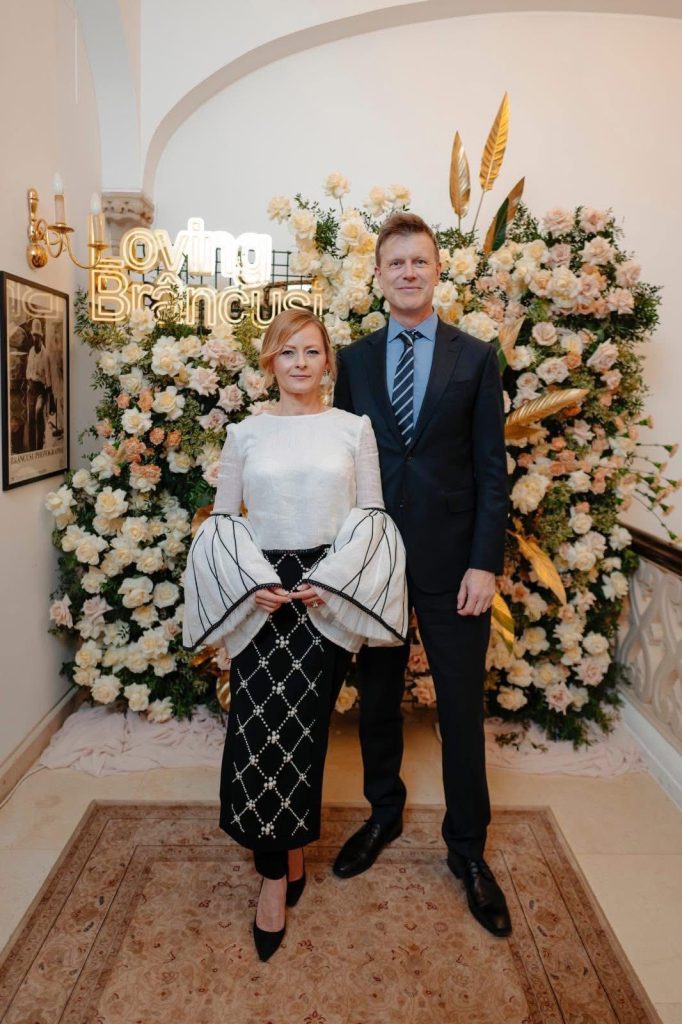
An evening in which Brâncuși was present
Loving Brâncuși is not merely an exhibition. It is a declaration of love for an artist who understood that simplicity is the highest form of refinement. It is an invitation to introspection, gratitude, and rediscovery of a heritage that belongs not only to Romania, but to the entire world.
It was, in essence, an evening in which Brâncuși was once again among us — through his objects, his friendships, his music, and through the people who carry his story forward.
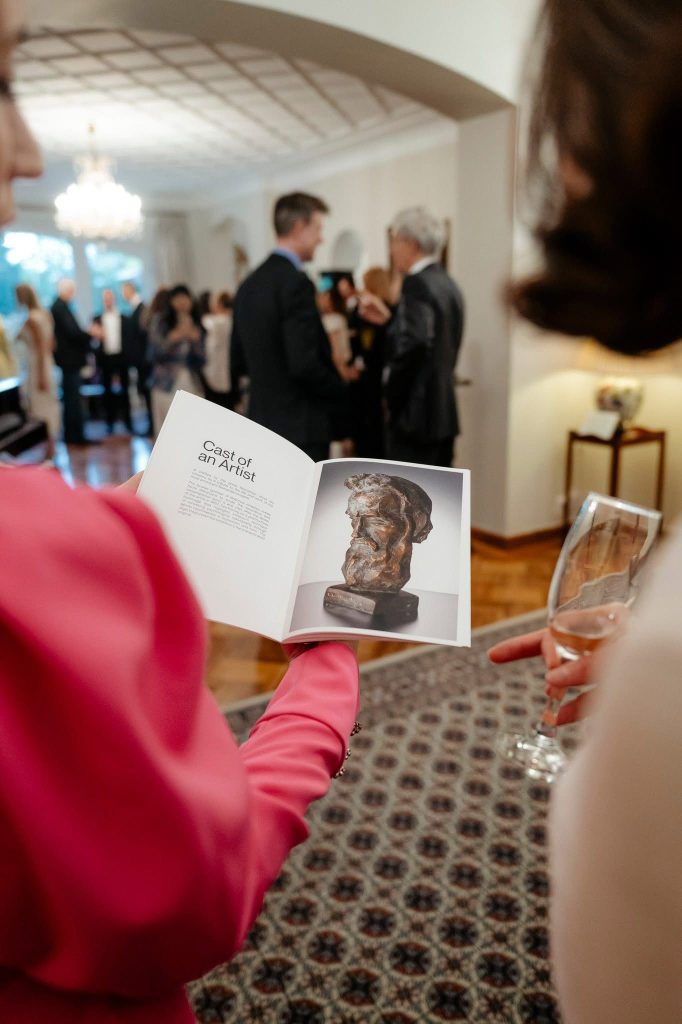
The exhibition reveals an “unguarded” Brâncuși: objects that do not document, but evoke; pieces that do not explain, but illuminate. They are fragments of studio life, of friendship, of intimacy — a constellation of elements that each bear the trace of the man who transformed sculpture into a way of thinking. The evening was complemented by the finesse of Zelateria chocolate.
I had the privilege of admiring:
Cast of an Artist — crafted by the great Romanian artist Ion Irimescu, the bronze portrait of Brâncuși employs subtle facial distortions to evoke his innovative and contemplative spirit; it was cast after the artist’s death in 1957.
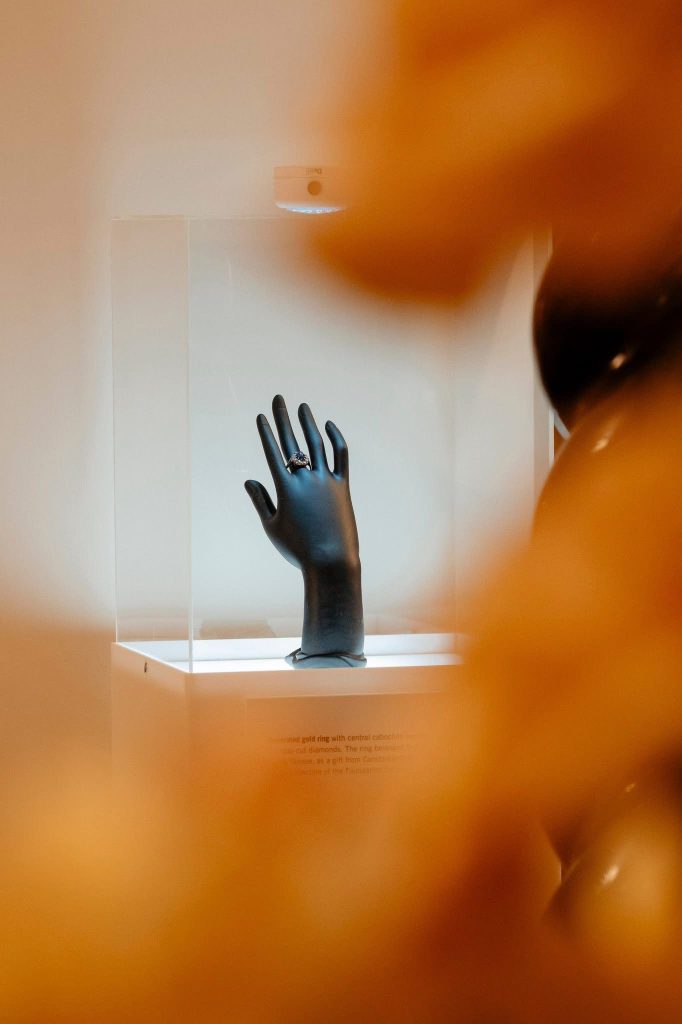
Voice of the Ring — a sapphire and diamond ring offered by Constantin Brâncuși to the singer Maria Tănase, one of the most intimate objects tied to the relationship between the two iconic Romanian artists. The ring is crafted from 10K red gold and silver, set with an oval sapphire of approximately 3.50 carats, surrounded by ten rose-cut diamonds.
Moulded by Muse — the plaster bas-relief of Brâncuși made by Milița Petrașcu, a deeply personal artifact.
The Quiet Hour – Sleeping Muse — marking one of the moments when Brâncuși abandoned the body altogether, retaining only the head. Modelled on Baroness Renée Irana Franchon, the work reduces the human face to an oval of polished bronze, eyes closed, features smoothed to near-abstraction, the entire form suspended between traditional portraiture and pure object.
Letters to America – a philosophical Brâncuși -Three of the twelve original letters Brâncuși sent to his friend Florence Meyer, daughter of the Washington Post owner, were presented to the public — rare documents dispersed across the world. Florence Meyer was everything a wealthy and charming American woman could be in the 1930s. Between Brâncuși and Florence grew a close bond, followed by years of correspondence that endured beyond physical separation and the Atlantic Ocean. The object featured in the exhibition is authenticated as original.
“Dance me to the end of love”– When Brâncuși turned his hand to designing a costume for avant-garde dancer Lizica Codreanu, he did what he invariably did — he distilled. The garment he conceived was not mere adornment but an extension of his sculptural thinking: form reduced to its essentials, the human body reimagined as both subject and material.
That such an object should have been brought to life is remarkable in itself. That it now travels as an installation, moving from space to space, inviting encounters in places and contexts its creator could never have anticipated, renders it all the more alive.
To stand before it is to glimpse, in a single gesture of cut and line, the full breadth of Brâncuși’s imagination — one that recognised no boundary between sculpture and the other arts, between object and living form, between the stillness of stone and the eloquence of a body in motion. The installation includes a reproduction of the lost original costume based on period photographs and is part of the travelling exhibition Brâncuși and the Muses of Dance, organised by the National Patrimony Institute.
The curatorial texts speak of an essential idea: in front of a Brâncuși work, one understands that art does not describe the world — it reveals its essence. He did not seek form, but the truth behind it; not the figure, but the state of being. This perspective, radical in its time, became the foundation of sculptural modernism.
Photographs, portraits, friendships that became destiny
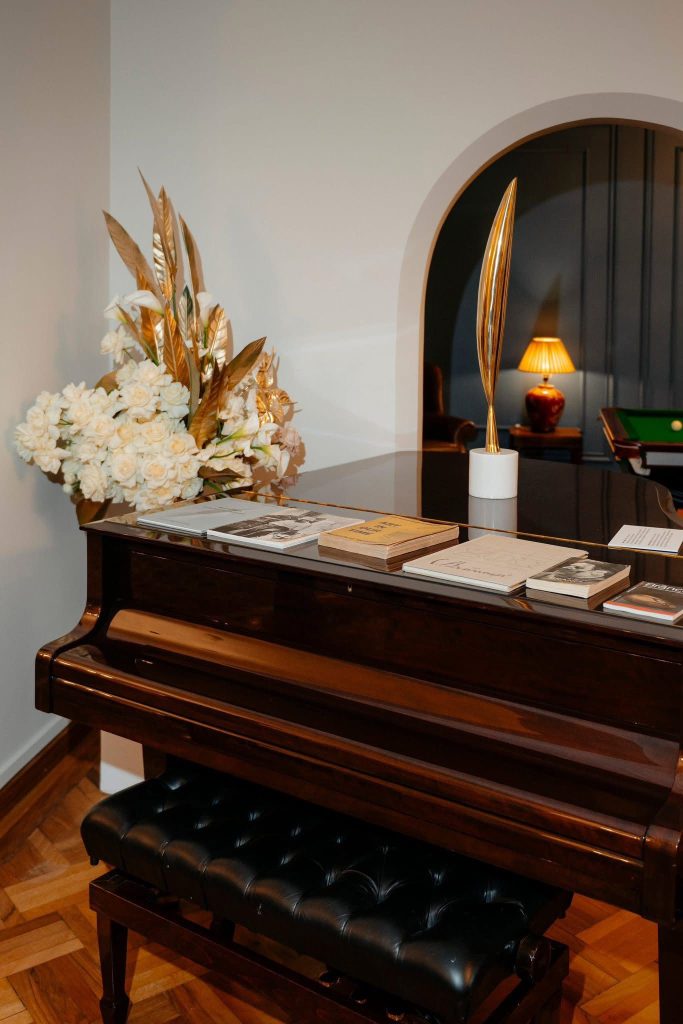
The exhibition brings together photographs and portraits created by the sculptor’s friends and disciples, as well as two paintings by Natalia Dumitrescu and Alexandru Istrati — the couple who cared for him in his final years and became custodians of his artistic legacy.
These works are not mere exhibits: they are fragments of life, of studio, of friendship. They are testimonies of a world in which art was not an object, but a breath.
In these images and recollections, Brâncuși appears as a man of discreet warmth, dry wit, and fierce intellectual independence. In the eyes of those who knew him, he does not diminish through proximity — he expands. His genius multiplies with every gaze that returns to him.
The Foundation for Art, Nature and Society – guardian of treasures
The collection on display comes from the Foundation for Art, Nature and Society, which succeeded in bringing before the public rare, intimate objects, some of them replicas of the sculptor’s famous works.
“We hold pieces of his soul,” said Mihaela Nicola, the Foundation’s president, emphasising the deeply personal nature of these objects.
“The works and memory-objects gathered in this collection are the fruit of an ongoing mission. The Foundation for Art, Nature and Society, supported by The Group, has long understood that an artist’s legacy is too rich, too human, to remain confined to the distant solemnity of a museum. Our mission is one of art democratisation: bringing artists closer to their public, making them legible not only through the splendour of their work, but through unexpected, intimate angles. By assembling this collection, the Foundation offers something no retrospective of Brâncuși’s masterpieces alone could achieve: a glimpse of the man behind the form, an invitation to approach the titan not only with reverence, but with curiosity, warmth, and the quiet thrill of discovery.” — Mihaela Nicola
“In art, there are no foreigners” — Brâncuși’s phrase hovered over the entire evening like an invisible thread connecting cultures, eras, and sensibilities. The exhibition thus became not only a cultural event, but an act of affective diplomacy — a bridge between worlds built through beauty and memory.
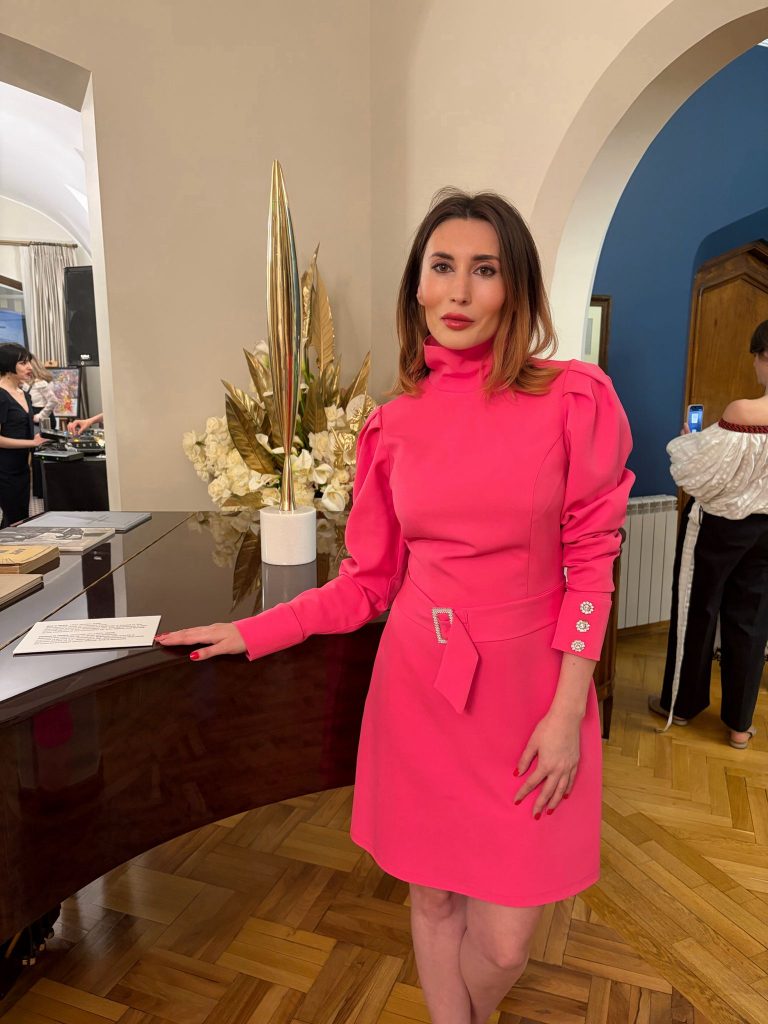
I am Anca Ghinea, and I bring people closer to art, heritage, and the stories that shape our cultural identity. I write to turn memory into light and to make visible what deserves to endure.