Article by Anca Ghinea
The Creative MBA program at Bucharest Business School is one of the few educational formats in Romania that approaches the creative industries through an educational, managerial, and strategic lens. At the invitation of Dalia Bologan, the Program Coordinator, I attended a full day of courses to observe firsthand how this MBA operates, what types of competencies it develops, and how dialogue is built between the professionals in the cohort and the academic faculty.

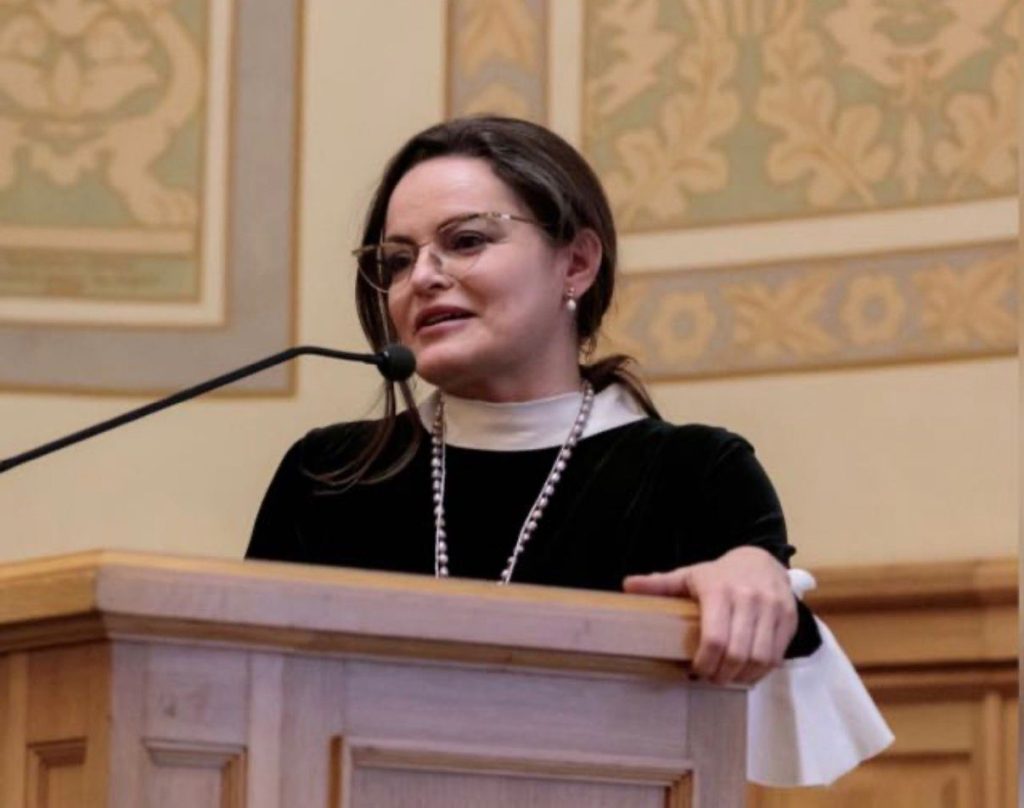
The day also included the Cultural Diplomacy course, taught by Assoc. Prof. Dr. Mireille Rădoi, Director of the National Central University Library, held in the beautiful Regina Maria Hall. During this session, I delivered a short intervention on creativity as a resource for both professional and personal support — a topic that naturally aligns with the program’s structure, which is oriented toward applied competencies.
From here began the exploration of a day inside the Creative MBA: a program built on rigor, on understanding the economic and organizational mechanisms of the creative industries, and on shaping professionals capable of making informed decisions in a continuously evolving sector.

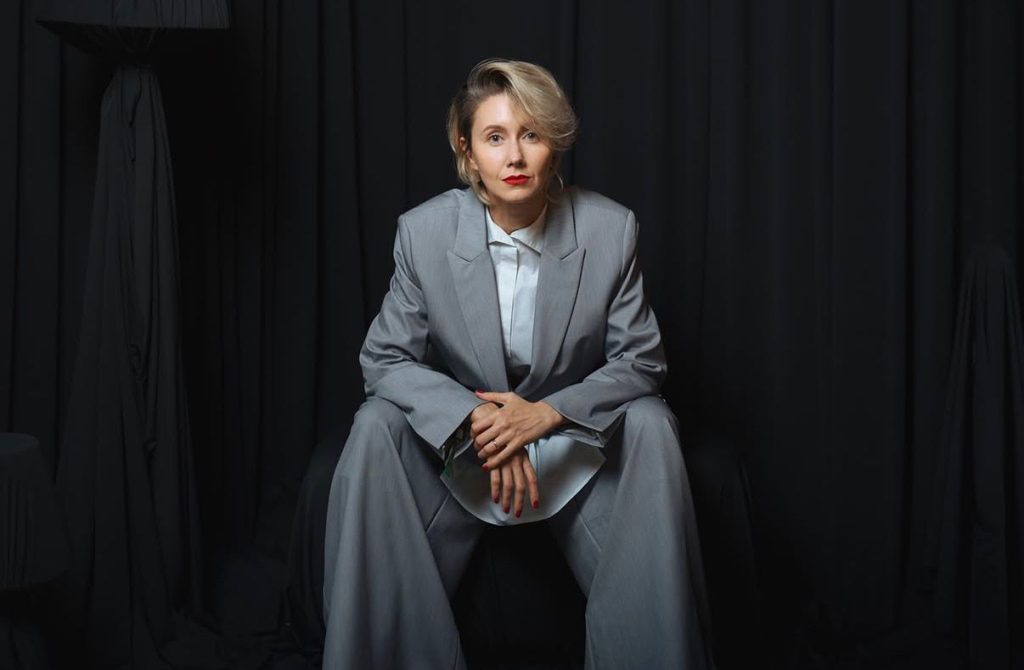
Dalia Bologan, Program Coordinator:
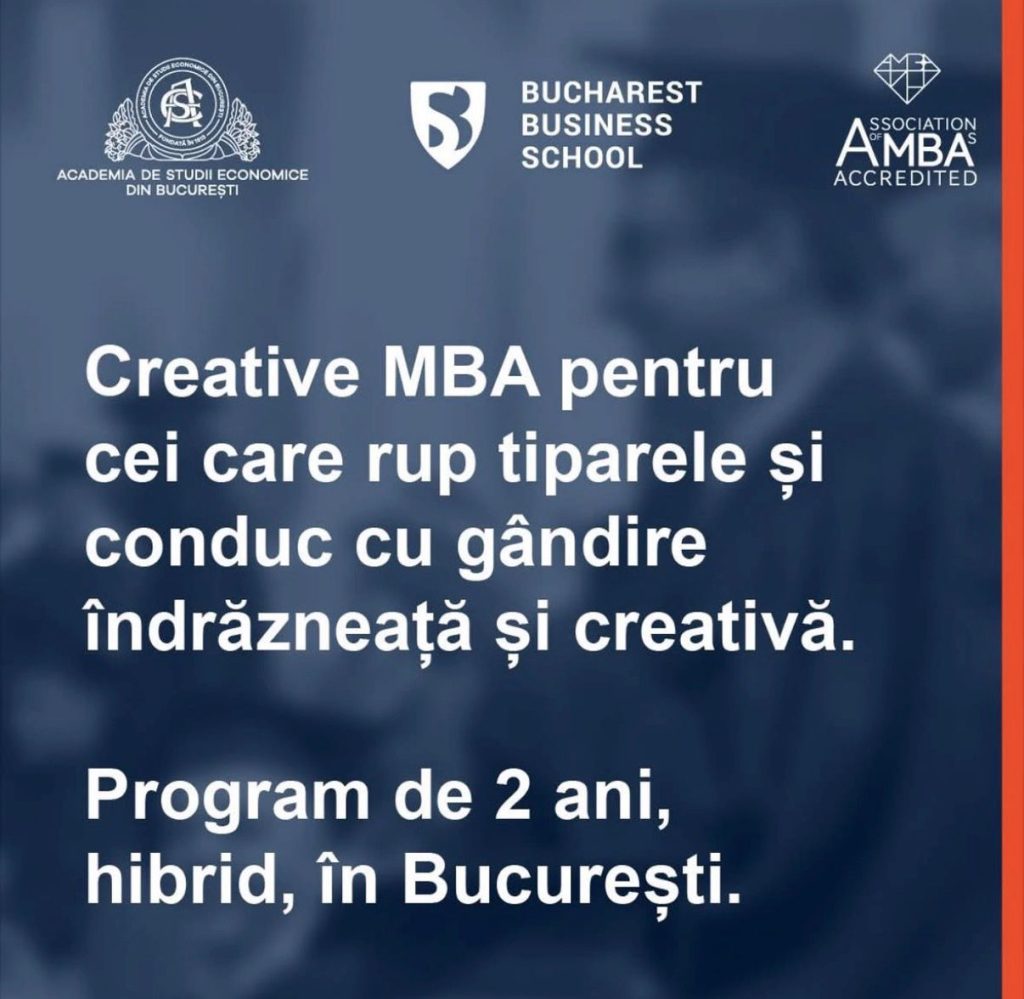
“The Creative MBA is for those who break patterns and lead with bold and creative thinking. It is a two‑year hybrid program. We teach artists, designers, performers, and cultural entrepreneurs how to build stable and successful creative businesses, how to understand markets without losing their essence, how to grow teams, and how to generate impact without compromise. Above all, we teach them how to take control of their future with strategy, confidence, and community.”

I hold the hope that Bucharest is increasingly remembering who it is: an eclectic, dynamic city where culture, education, and creativity intersect naturally. The Creative MBA, delivered by ASE through Bucharest Business School, seeks to answer a fundamental question for today’s professionals: How do you build a sustainable creative career in a world defined by constant change?
Assoc. Prof. Dr. Mireille Rădoi:
“This MBA dedicated to the creative industries aims to challenge the assumption that professions associated with aesthetic or artistic ‘bohemia’ cannot also be entrepreneurial. The way the program infuses a more realistic philosophy into fields such as design, brand development, music schools, independent theatres, or event production is essential. All these areas require a coherent approach in which market mechanisms are correctly understood.”

Cultural Diplomacy in a Space of Memory
The Cultural Diplomacy course, taught by Assoc. Prof. Dr. Mireille Rădoi, took place in Regina Maria Hall — a space that carries both solemnity and the energy of intellectual dialogue. It was an ideal setting to discuss creativity as a tool of representation, as a bridge between worlds, and as a form of leadership. The Creative MBA participants quickly aligned with this rhythm of conversation: curious, analytical, and eager to understand more deeply the mechanisms of the cultural and creative sectors.
Assoc. Prof. Dr. Mireille Rădoi:
“The course I teach — Cultural Diplomacy — was developed out of a desire to explore how, in a VUCA world (volatile, uncertain, complex, ambiguous), the bridge between tradition and innovation remains essential. I aim to bring valuable case studies to students and challenge them to imagine how the creative industries will evolve in a digital and AI‑driven environment.”
Anca Ghinea — creator, podcaster, published author, with 20 years of integrated experience in media, advertising, and PR:
“I spoke at the Creative MBA about the role of creativity at the intersection of personal and professional life, and about how this competence becomes a tool for orientation, decision‑making, and resilience. For me, creativity has not only been a professional advantage but a concrete mechanism of survival — it helped me remain whole emotionally and rebuild financially during the most difficult periods, when everything seemed blocked.”
A Program Built on Four Essential Pillars
The Creative MBA is not merely an academic program; it is a structure designed to prepare professionals to navigate the complexity of the creative world. Its four main pillars are:
• Critical Thinking – Participants learn to analyze the economic, legal, and organizational dynamics of the creative industries. Courses such as Economics of Creative Industries, Budgeting & KPIs, Funding, and Intellectual Property Law help them connect strategic objectives with measurable outcomes.
• Creative Thinking – Each cohort forms an ecosystem of its own: entrepreneurs, artists, cultural managers, and public‑sector professionals. Their diversity generates complementary perspectives and a collaborative learning environment rarely found in traditional programs.
• Tech Literacy – From digital tools to artificial intelligence, participants learn to use technology as a strategic resource rather than an accessory.
• Leadership & Business Skills – From managing creative teams to the sustainable administration of cultural projects, the program provides a solid foundation for those who aim not only to create but to build.
A Structure Designed for Active Professionals
The program spans two years, divided into four semesters, with a rhythm adapted to working professionals:
- one on‑campus weekend per month
- three online evening sessions per week
- international study trips through Erasmus Mobility
- upskilling workshops in Predeal
- collective projects, including a 40‑sqm space at the deGalben Creative Industries Hub
This is an MBA lived not only in classrooms, but in the city, in the community, and in real projects.
An Eclectic Bucharest as an Extension of Learning
The day did not end at BCU. After the course, participants explored an eclectic Bucharest — a route that naturally complemented the discussions on culture, identity, and creativity. It was a transition from theory to reality, from concept to city, from ideas to the spaces that activate them.
Why This MBA Matters
Because it offers something often missing in creative education in Romania: structure, rigor, community, international perspective, and a framework in which creativity becomes strategy, not just inspiration.
Because it helps professionals better understand their identity, identify opportunities, make informed decisions, and build projects with real impact.
And because, in a world where creativity is increasingly recognized as economic capital, this MBA provides the exact tools needed to transform talent into direction — and direction into a career.


I am Anca Ghinea, an interdisciplinary creator with over 20 years of experience in media, and I seek to document and share stories about people and projects that shift perspectives.